A data center can technically be built in many places. But the largest modern facilities cannot simply choose an inexpensive piece of land and start construction.
The location has to support an unusually demanding combination of infrastructure.
A strong data-center site needs more than acreage. Developers are looking for places where computing equipment can be connected to large amounts of reliable electricity and high-capacity fiber—and where the project can actually be permitted, built, cooled, and operated.
Electricity May Be the First Filter
For a large AI or hyperscale project, access to power can determine whether a site is practical at all.
A property may have plenty of land but still be a poor location if the nearby electrical system cannot support the proposed load without years of upgrades.
Lawrence Berkeley National Laboratory reported in 2026 that rapid growth from data centers and other large electricity users is creating grid-connection bottlenecks across the United States.
That helps explain why sites with existing transmission capacity—or realistic plans for new generation and interconnection—can attract so much attention.
Fiber Is the Other Essential Connection
Data centers exist to process, store, and move information. That information has to reach the facility and leave it again.
High-capacity fiber-optic connections are therefore a basic part of site selection.
The U.S. Department of Energy lists nearby fiber trunk lines as an important consideration for data-center development. Fiber can be extended to a site, but doing so can add cost, permitting, land-access issues, and construction time.
For some workloads, proximity to users and other network hubs can also affect performance because distance adds communication delay, or latency.
Water and Climate Can Change the Cooling Equation
Cooling requirements also vary by location.
Some cooling systems use significant amounts of water, while others use little on-site water. Climate influences how efficiently different cooling approaches operate.
This means the same data-center design may have different energy and water consequences in different regions.
Water availability can therefore matter greatly for some projects and much less for others, depending on the cooling technology being proposed.
Land Is About More Than Acreage
Large campuses may need hundreds of acres, especially when future expansion or on-site power generation is planned.
But developers also care about whether that land is actually ready to use.
Important questions can include zoning, environmental conditions, flood risk, road access, neighboring land uses, permitting, ownership, and how quickly construction can begin.
DOE materials on data-center siting specifically identify utility capacity, water availability, site access, regulatory policies, transmission, fiber, and development readiness as important considerations.
Why Some Locations Suddenly Become Valuable
Put these factors together and the current development pattern makes more sense.
A site with:
- large amounts of usable land,
- available or expandable electrical capacity,
- nearby high-capacity fiber,
- appropriate water or cooling options, and
- a realistic path through permitting and construction
can be far more attractive than cheaper land without that infrastructure.
The recently selected federal site at Paducah, Kentucky provides a useful example. DOE specifically pointed to its existing transmission capacity, water infrastructure, fiber connectivity, and available land as reasons the location can support large-scale AI infrastructure.
The Map Tells Only Part of the Story
When people ask why a data center is being proposed in one community rather than another, the answer may have little to do with population size or whether the location seems like a technology center.
The real attraction may be hidden infrastructure: a transmission corridor, available grid capacity, fiber routes, industrial land, water systems, or a faster path to development.
So the better question isn't simply:
“Why would they build a data center here?”
It is:
“What does this location have that the data center needs?”
Related: Why Are Data Centers Being Built So Quickly?
Related: Who Pays for Data Center Power Infrastructure?
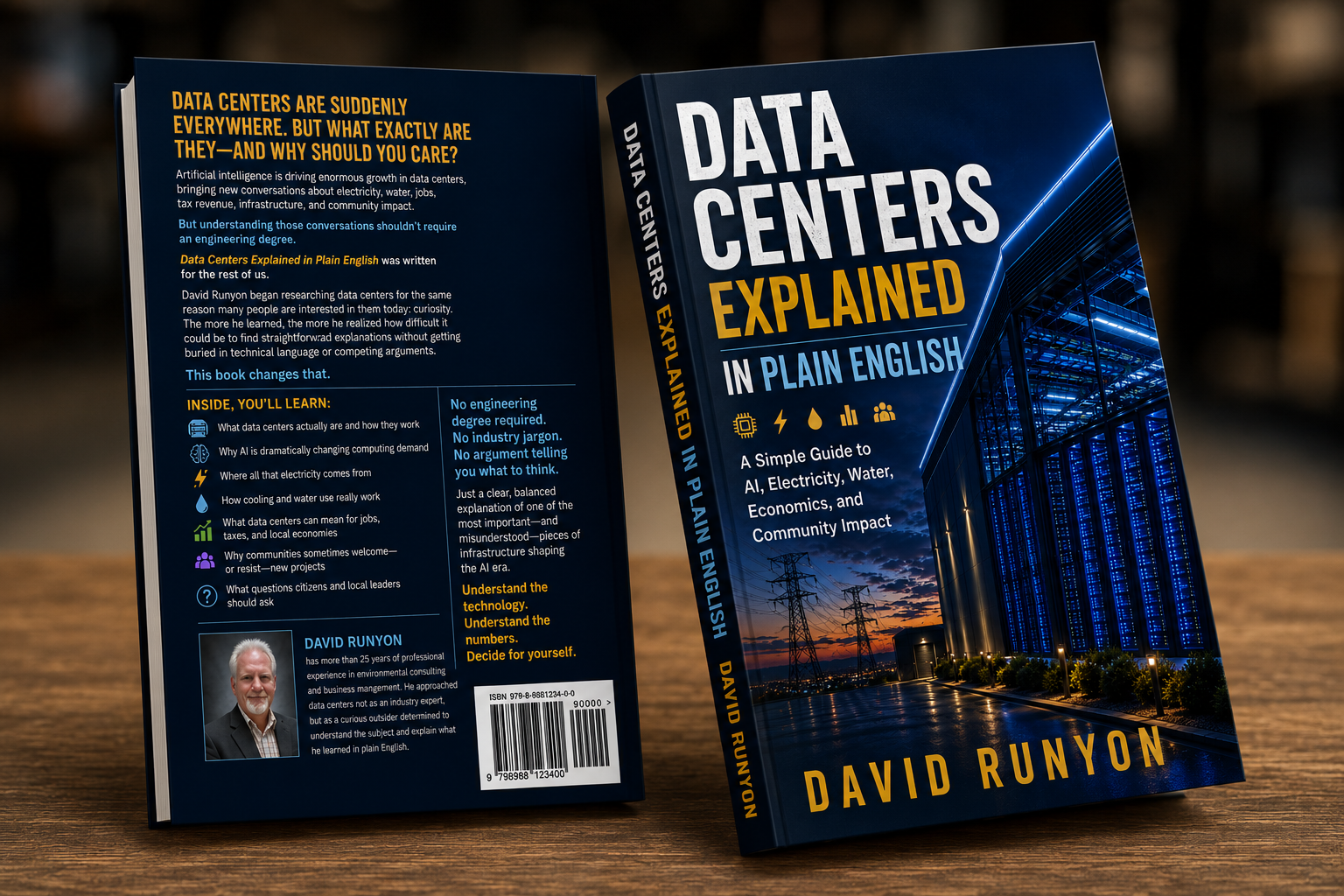
WANT THE COMPLETE GUIDE?
See How All the Pieces Fit Together
Data Centers Explained in Plain English connects site selection, electricity, AI, water, economics, infrastructure, and community impact in one easy-to-follow guide.
Understand the technology. Understand the numbers. Decide for yourself.
Prefer a printed copy or Kindle? Amazon has you covered. Want to start reading right now? The complete PDF is just $9.99.
Sources & Further Reading
- U.S. Department of Energy — Data Centers: Exploring the Opportunity for Tribes
- Lawrence Berkeley National Laboratory — Speed to Power (2026)
- Lawrence Berkeley National Laboratory — Repurposing Coal Assets for a Decarbonized Digital Economy
- U.S. Department of Energy — Paducah Energy and AI Infrastructure Development (2026)
Educational information only. Site-selection priorities vary by project, workload, utility conditions, cooling design, development schedule, local regulations, and business requirements.