When a major data center is announced, attention usually focuses on how much electricity it will use. But there is another question that may matter just as much to residents and businesses:
Who pays for the infrastructure needed to deliver that electricity?
There is no universal rule. Costs can be assigned to the data-center customer, shared through utility rates, handled through special contracts or tariffs, or divided in other ways depending on the project and regulatory structure.
Why a Data Center May Need More Than Existing Power Lines
Very large data centers can request hundreds of megawatts of electrical capacity. Some proposed campuses are much larger.
Serving loads of that scale may require new substations, transformers, transmission upgrades, distribution equipment, or additional electricity generation.
Lawrence Berkeley National Laboratory reported in 2026 that rapid growth from data centers and other large loads is creating grid-connection bottlenecks across the United States. The U.S. Department of Energy has likewise identified data-center growth as one factor increasing the need for transmission infrastructure.
That means the cost question is no longer theoretical.
Why Ratepayers Are Part of the Discussion
Utilities traditionally recover many system costs through rates paid by their customers. But an unusually large new customer can create infrastructure needs that would not otherwise have occurred—or would not have occurred as quickly.
If those costs are spread too broadly, existing households and businesses could potentially help pay for infrastructure built primarily to serve the new load.
There is another risk: what happens if a utility builds expensive infrastructure for a proposed data center and the project is delayed, uses much less electricity than expected, or never reaches its planned size?
DOE and Berkeley Lab have both identified fair cost allocation and the risk of underused utility investments as important issues in designing rates for large electricity users.
Special Rates Can Change the Equation
One response is to create special large-load tariffs or contracts.
These arrangements can include minimum payments, longer contract terms, requirements to pay for dedicated infrastructure, or other provisions designed to reduce the financial risk to ordinary customers.
A 2026 Ohio data-center agreement provides a useful example. DOE says the developer committed to paying for $4.2 billion in new transmission infrastructure and using a dedicated data-center rate structure intended to keep those costs from being shifted to Ohio households and small businesses.
That does not mean every data-center project is structured that way. It shows why the details of the utility agreement matter.
The Questions Communities Should Ask
When a large project is proposed, the useful questions go beyond “How many megawatts?”
- What new electrical infrastructure is required?
- Which upgrades are dedicated primarily to the data center?
- Who pays the upfront construction cost?
- Can those costs later be recovered from other ratepayers?
- What happens if the project uses less electricity than forecast?
- Is there a special tariff or long-term service agreement?
A new substation or transmission line may also benefit the broader grid. That is why cost allocation is not always as simple as making one company pay for everything.
The Megawatt Number Doesn't Tell You This
Two data centers requesting the same amount of electricity can have very different effects on customers depending on where they are built, how much existing grid capacity is available, what new infrastructure is required, and how the utility agreement assigns the costs.
So when evaluating a proposed project, knowing its electricity demand is only the first step.
The next question may be even more important:
Who is financially responsible for making that power available?
Related: How Much Electricity Do Data Centers Use?
Related: How Do Data Centers Affect Local Communities?
WANT THE COMPLETE GUIDE?
See How All the Pieces Fit Together
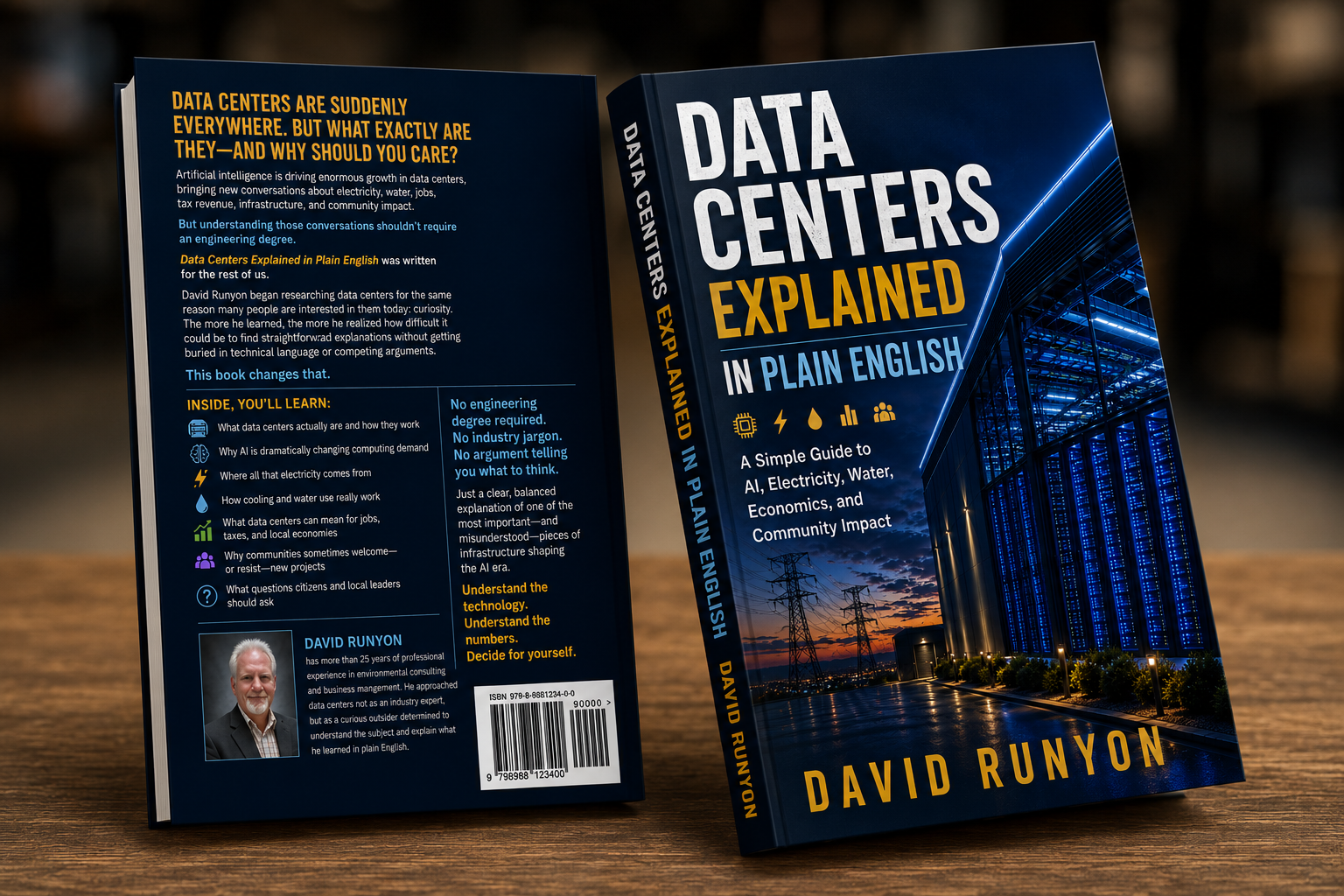
Data Centers Explained in Plain English connects electricity, infrastructure costs, AI, water, economics, and community impact in one easy-to-follow guide.
Understand the technology. Understand the numbers. Decide for yourself.
Prefer a printed copy or Kindle? Amazon has you covered. Want to start reading right now? The complete PDF is just $9.99.
Sources & Further Reading
- Lawrence Berkeley National Laboratory — Speed to Power: Solutions for Accelerating Large Load Connections (2026)
- Lawrence Berkeley National Laboratory — Electricity Rate Designs for Large Loads: 2026 Update
- U.S. Department of Energy — 2026 National Transmission Needs Study
- U.S. Department of Energy — Ohio Data Center and Power Infrastructure Fact Sheet (2026)
Educational information only. Utility rates, infrastructure responsibilities, cost allocation, and regulatory requirements vary by utility, state, project, and electricity market.