Ask an AI assistant a question and an answer may appear on your screen within seconds. It feels almost effortless.
Behind that response, however, are physical processors performing calculations, servers communicating with one another, networks moving information, electrical systems supplying power, and cooling equipment removing heat.
AI → processors → servers → electricity → heat → cooling → data centers.
AI is software. But software cannot operate without hardware, and the largest AI systems need far more computing infrastructure than a typical laptop or phone can provide.
Why AI Uses Specialized Processors
Traditional computers rely heavily on CPUs, or central processing units. Modern artificial-intelligence workloads often benefit from specialized processors known as accelerators. GPUs are the best-known example.
These processors are particularly good at performing many mathematical operations in parallel—exactly the kind of work required by many machine-learning systems.
A modern AI server can contain several powerful accelerators. Many servers can then be connected into a much larger computing cluster.
That ability to combine enormous amounts of computing power is one reason data centers are so important to AI.
Training AI and Using AI Are Different
Two terms help explain the infrastructure requirement.
Training is the process of developing or refining an AI model. Large amounts of information can be processed while the system adjusts its internal parameters.
Inference occurs when someone actually uses the trained model. When an AI chatbot answers a question or an image generator creates a picture, inference is taking place.
A single inference request may require far less computing work than training a major model. But serving enormous numbers of users can make inference a substantial infrastructure requirement of its own.
Why AI Changes the Data Center
The International Energy Agency identifies accelerated computing driven largely by AI as a major contributor to increasing data-center power density and electricity demand.
That matters because concentrating more computing power into a rack creates two immediate challenges:
- More electricity has to reach the equipment.
- More heat has to be removed from the same physical area.
High-performance AI systems also need extremely fast networking so processors can exchange information without spending expensive computing time waiting on one another.
This is why an AI data center is much more than a warehouse filled with GPUs.
The Cloud Is Surprisingly Physical
Once you follow the chain far enough, AI becomes an infrastructure story.
Large AI facilities can require high-capacity electrical service, substations, transformers, backup power, sophisticated cooling, fiber-optic networks, storage systems, and buildings engineered around dense computing equipment.
And that raises another layer of questions:
- Where will all of the electricity come from?
- What cooling technology will be used?
- Will the facility consume significant amounts of water?
- Will new transmission lines or substations be required?
- How quickly can utilities connect very large new loads?
- Who pays for the supporting infrastructure?
Those aren't merely technology questions anymore. They are energy, infrastructure, economic, and community questions.
Why This Matters Beyond AI
The International Energy Agency expects worldwide data-center electricity consumption to rise substantially through 2030, with AI-related accelerated computing responsible for a significant portion of the growth.
But exactly how much infrastructure AI will ultimately require remains uncertain. Hardware is becoming more efficient. Software is improving. Some AI will run directly on phones and computers. At the same time, new applications could dramatically increase how often AI is used.
That's why simple claims such as “AI will overwhelm the grid” or “efficiency will solve the problem” deserve closer examination.
The more useful question is how computing demand, efficiency, electricity, cooling, infrastructure, and growth interact.
Once you understand that relationship, the current data-center boom makes much more sense.
Start with the basics: What Is a Data Center?
Related: How Much Electricity Do Data Centers Use?
WANT THE WHOLE PICTURE?
Go Beyond the Introduction
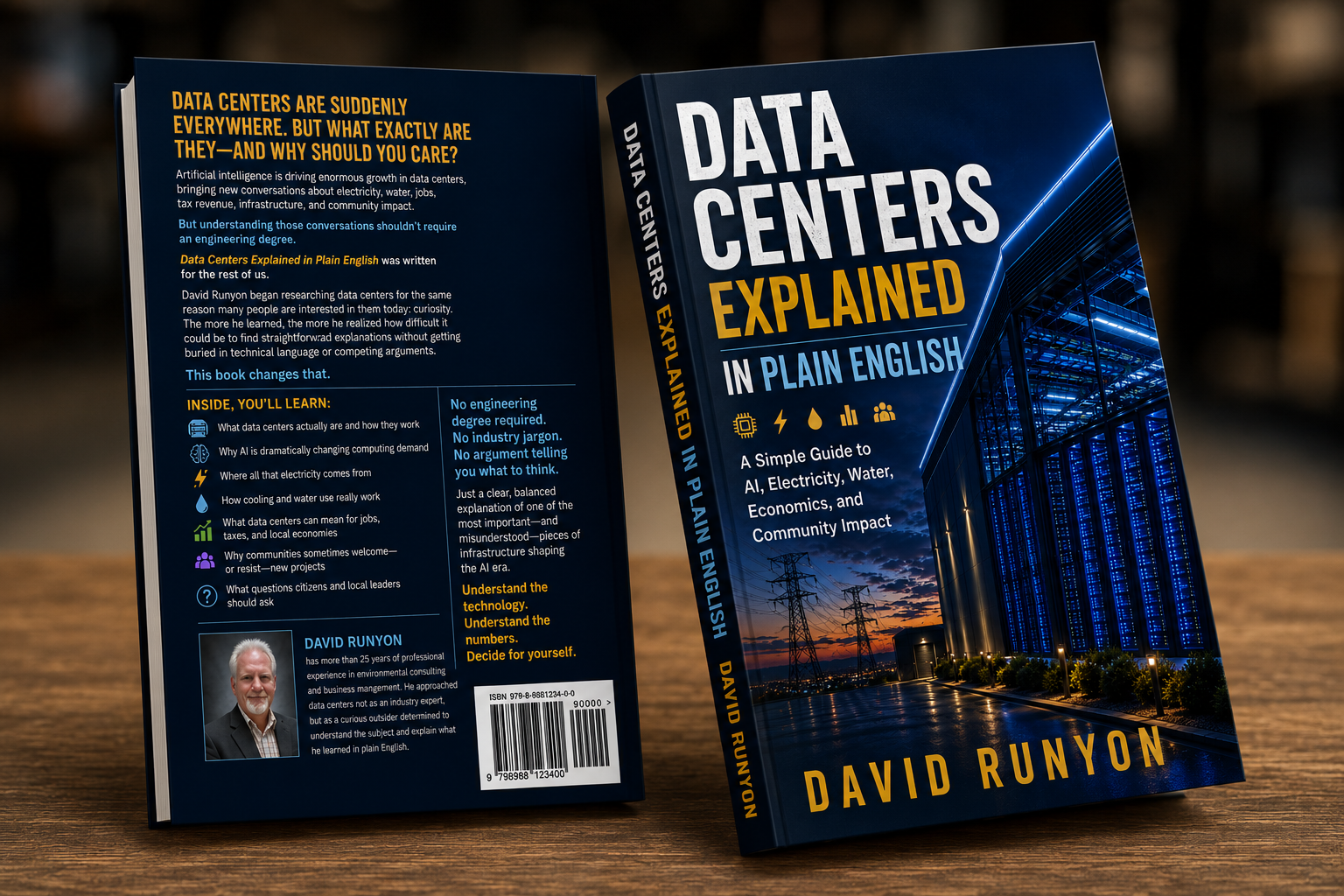
This article gives you the foundation. Data Centers Explained in Plain English connects the bigger questions about AI, electricity, cooling, water, economics, infrastructure, and community impact in one easy-to-follow guide.
The goal isn't to convince you to support data centers—or oppose them. It's to give you enough understandable information to evaluate the claims, numbers, benefits, concerns, and tradeoffs for yourself.
Understand the technology. Understand the numbers. Decide for yourself.
Prefer a printed copy or Kindle? Amazon has you covered. Want to start reading right now? The complete PDF is just $9.99.
Sources & Further Reading
Educational information only. AI hardware, software, workloads, efficiency, electricity requirements, and cooling technologies are changing rapidly.