When a large data center is announced, one number often dominates the conversation: megawatts.
A project might be described as 50 MW, 100 MW, or several hundred megawatts. Those figures can be important, but they are also easy to misunderstand.
Megawatts (MW) measure a rate of power. Megawatt-hours (MWh) measure electrical energy used over time. They are related, but they are not interchangeable.
Power Is Not the Same as Energy
Think about a water faucet. How quickly water is flowing is similar to power. How much water collects in a bucket after an hour is similar to energy.
If a facility actually drew 100 MW continuously for one hour, it would consume 100 MWh during that hour. But hearing that a proposed data center is “100 MW” does not automatically mean it will operate at exactly 100 MW every minute of every day.
The number might describe maximum capacity, planned demand, one development phase, IT equipment, or another design figure. Actual consumption depends on utilization, equipment, cooling, operating conditions, and how the facility is built out over time.
Why Is Electricity Demand Growing?
Data centers already supported cloud computing, streaming, online commerce, storage, and countless other digital services before today's AI boom.
Artificial intelligence is adding another layer of demand. Modern AI systems can use large numbers of specialized high-performance processors working together. More computing equipment means more direct electrical demand—and more heat that must be removed.
Lawrence Berkeley National Laboratory estimated that U.S. data centers consumed about 176 TWh in 2023, approximately 4.4% of total U.S. electricity consumption. Its 2026 update projects a wide range of possible outcomes through 2030, illustrating how uncertain future AI growth and utilization remain.
The International Energy Agency likewise expects data-center electricity demand to grow substantially worldwide, with AI-driven accelerated computing contributing significantly to that increase.
The Headline Number Is Only the Beginning
This is where the subject becomes more interesting.
A data center does not simply plug into an unlimited supply of electricity. Large projects can require substations, transformers, transmission capacity, backup systems, and other infrastructure.
So a community hearing that a project will require 100 MW should immediately have additional questions:
- Is 100 MW maximum capacity or expected operating demand?
- Does it include cooling and other supporting systems?
- Is it for one building or the completed campus?
- Will new substations or transmission lines be required?
- Where will the electricity come from?
- Who will pay for the infrastructure needed to serve the project?
Those questions are why comparing a data center's megawatt figure directly with homes, factories, or entire cities can sometimes create more confusion than understanding.
Why Context Matters
Electricity may be the single most important infrastructure issue surrounding the current wave of data-center development, but the useful question is not simply, “How much power does it use?”
The better question is: What does the number represent, how much energy will actually be consumed, what infrastructure will be required, and how will the costs and benefits be distributed?
Once you begin asking those questions, electricity quickly connects to generation, transmission, AI computing, cooling, water, utility planning, economics, and community impact.
That's where the bigger data-center story begins.
New to the subject? Start with What Is a Data Center? A Plain-English Explanation.
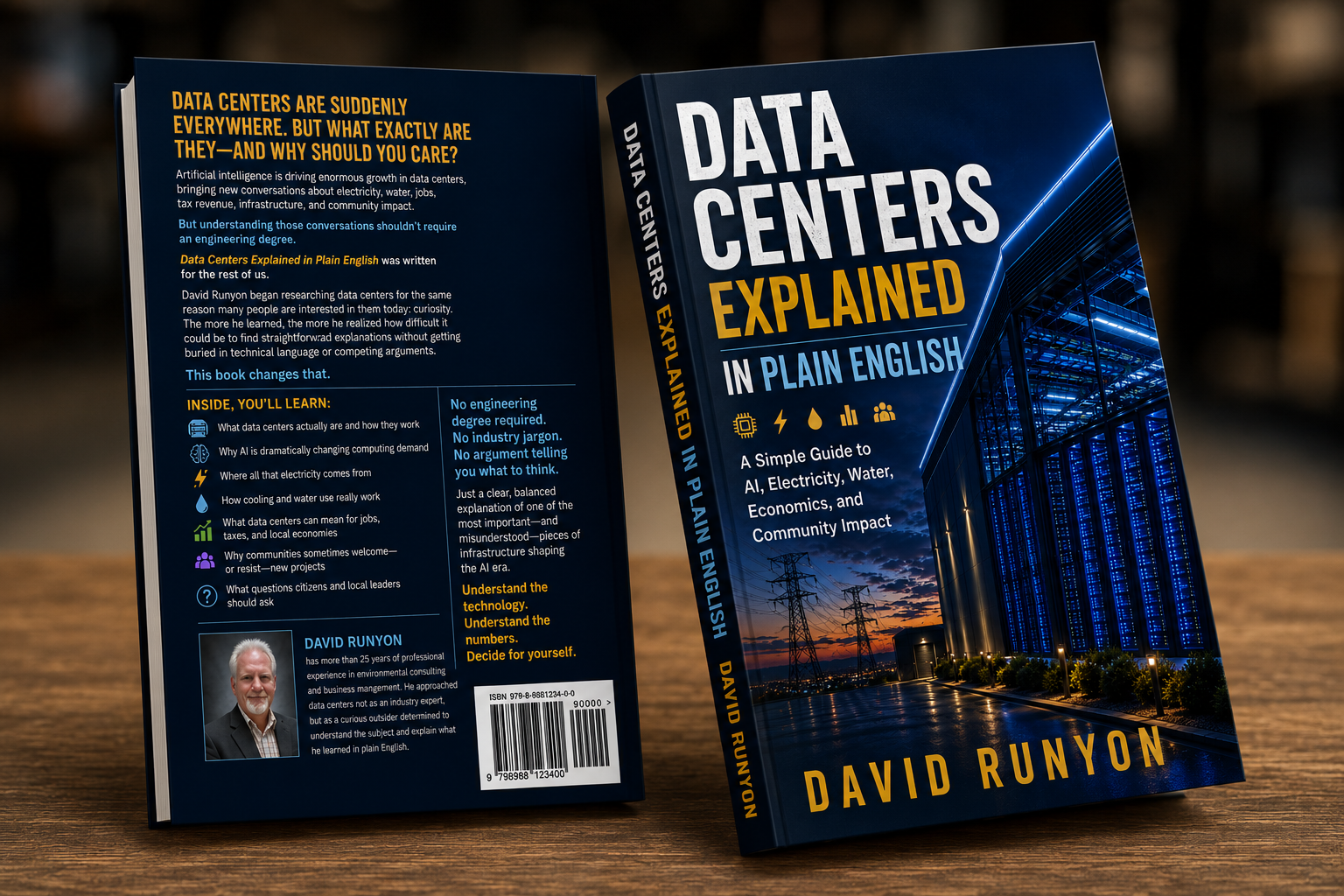
WANT THE WHOLE PICTURE?
Go Beyond the Introduction
This article gives you the foundation. Data Centers Explained in Plain English connects the bigger questions about AI, electricity, cooling, water, economics, infrastructure, and community impact in one easy-to-follow guide.
The goal isn't to convince you to support data centers—or oppose them. It's to give you enough understandable information to evaluate the claims, numbers, benefits, concerns, and tradeoffs for yourself.
Understand the technology. Understand the numbers. Decide for yourself.
Prefer a printed copy or Kindle? Amazon has you covered. Want to start reading right now? The complete PDF is just $9.99.
Sources & Further Reading
Educational information only. Electricity requirements vary substantially by facility, workload, utilization, cooling design, development phase, and local grid conditions.