A proposed data center can arrive with an eye-catching economic-development announcement: billions of dollars of investment, thousands of jobs, and new tax revenue for the community.
Those benefits can be very real. But the headline figures do not always describe the same thing.
A data center can be an enormous capital investment without employing an equally enormous number of people once construction is finished.
Construction Jobs and Permanent Jobs Are Different
Building a major data-center campus can require large numbers of electricians, equipment operators, concrete workers, pipefitters, engineers, construction managers, and other skilled trades.
Those jobs can last for years when a campus is developed in multiple phases.
But after construction, the employment picture changes. Operating a data center requires technicians, electricians, facilities personnel, engineers, security, maintenance, and other workers, but the number of permanent employees may be much smaller than the construction workforce.
A current example illustrates the difference. In July 2026, the U.S. Department of Energy announced a proposed data-center and energy-infrastructure development at its Paducah, Kentucky site involving more than $100 billion in private investment. DOE said the project is expected to create approximately 8,000 construction jobs and 600 permanent jobs.
Neither number is inherently good or bad. They simply describe different types of economic activity.
Why Can the Investment Be So Large?
Modern data centers are extraordinarily capital intensive.
The investment can include land, buildings, servers, high-performance AI processors, electrical equipment, cooling systems, backup power, networking equipment, fiber connections, and sometimes major new energy infrastructure.
That means a facility can represent billions of dollars of investment while occupying less labor than a traditional manufacturing operation with a similar investment figure.
For a community, the important question is therefore not simply:
“How much money is being invested?”
It is also:
“What does that investment produce for this community over the long term?”
Tax Revenue Can Be a Major Benefit
Data centers can generate substantial property, sales, utility, or other tax revenue depending on state and local tax laws.
In some established data-center markets, that revenue has become significant. The U.S. Department of Energy reports that Loudoun County, Virginia received more than $875 million in data-center tax revenue in a single year.
But that does not mean every community will experience the same result.
Tax treatment varies widely. States and local governments may offer exemptions, abatements, infrastructure assistance, or other incentives to attract projects. A large announced investment therefore does not automatically translate into a proportionally large local tax payment.
This Is Where the Economic Question Gets More Interesting
Jobs and taxes are only part of the equation.
A major project may also create demand for local contractors, hotels, restaurants, maintenance companies, suppliers, transportation, and professional services. Infrastructure investment can sometimes benefit other users as well.
At the same time, communities may need to consider public incentives, land use, roads, water systems, electrical infrastructure, emergency services, and other costs or commitments.
That leads to the questions that matter more than the press-release headline:
- How many jobs are temporary construction jobs?
- How many permanent jobs are expected after the facility opens?
- What taxes will actually be paid locally?
- What exemptions or incentives have been granted?
- What public or utility infrastructure will be required?
- Who pays for that infrastructure?
- What other businesses and development could the project attract—or displace?
The Better Question Is “Net Benefit to Whom?”
Data centers can produce meaningful economic benefits. They can also involve significant infrastructure requirements and public-policy choices.
That is why simply describing them as either an economic windfall or a poor jobs producer misses the larger picture.
A community should look at construction employment, permanent employment, tax revenue, incentives, infrastructure costs, utility arrangements, and long-term development together.
Once those pieces are separated, the economic-development claims become much easier to evaluate.
And that leads to one of the most useful questions surrounding any major data-center proposal:
Who pays, who benefits, and over what period of time?
Related: Why Does AI Need Data Centers?
Related: How Much Electricity Do Data Centers Use?
WANT THE WHOLE PICTURE?
Go Beyond the Introduction
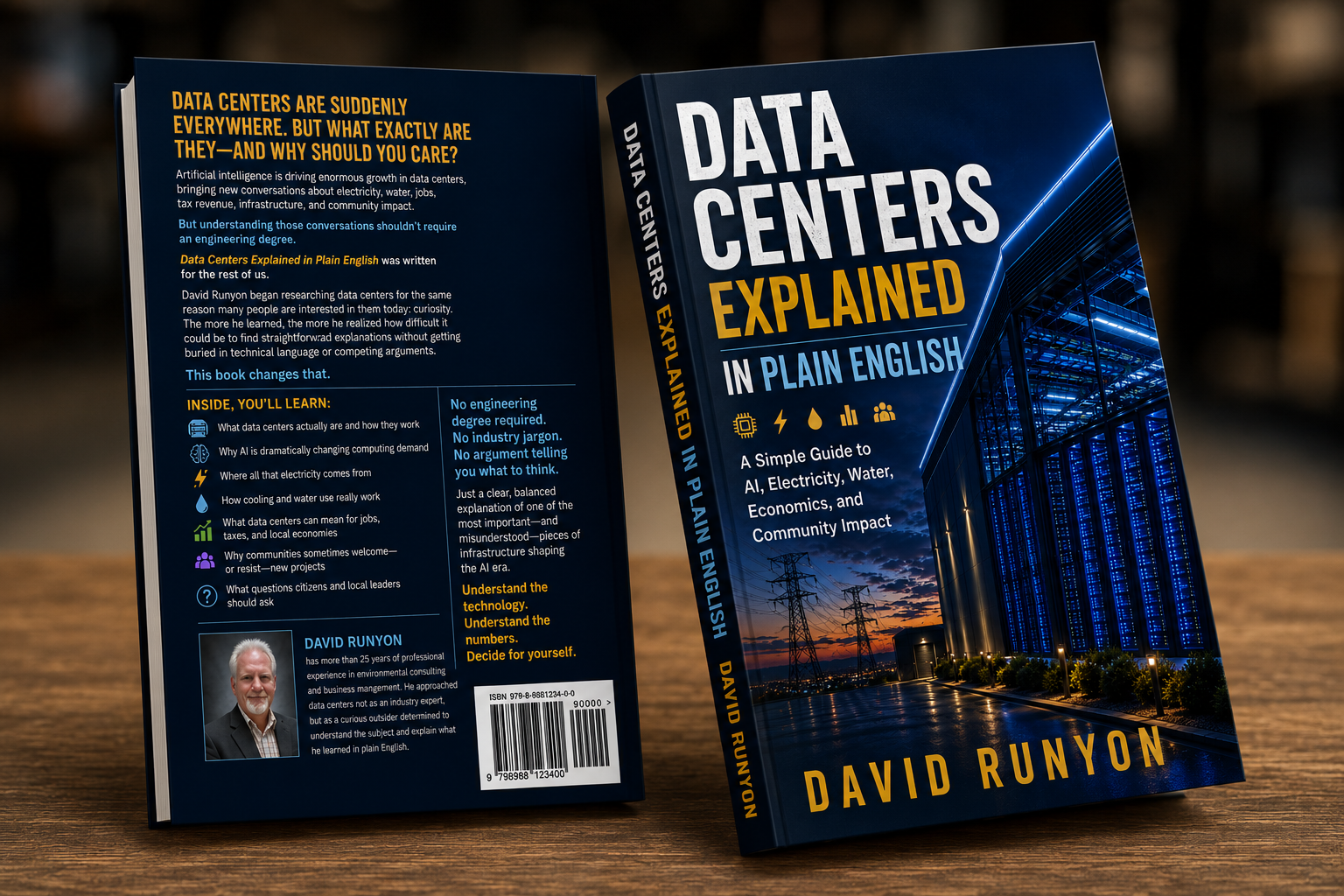
This article gives you the foundation. Data Centers Explained in Plain English connects the bigger questions about AI, electricity, cooling, water, economics, infrastructure, and community impact in one easy-to-follow guide.
The goal isn't to convince you to support data centers—or oppose them. It's to give you enough understandable information to evaluate the claims, numbers, benefits, concerns, and tradeoffs for yourself.
Understand the technology. Understand the numbers. Decide for yourself.
Prefer a printed copy or Kindle? Amazon has you covered. Want to start reading right now? The complete PDF is just $9.99.
Sources & Further Reading
- U.S. Department of Energy — Paducah Data Center and Energy Infrastructure Partnership (2026)
- U.S. Department of Energy — Data Center Resource Hub
- Lawrence Berkeley National Laboratory — Repurposing Coal Assets for a Decarbonized Digital Economy
- U.S. Department of Energy — Electricity Rate Designs for Large Loads
Educational information only. Economic impacts vary by project, location, tax structure, incentives, construction schedule, utility arrangements, and local economic conditions.