Water may be one of the most misunderstood numbers in the data-center debate.
One headline may describe a facility using millions of gallons. Another project may claim very low on-site water use. Those statements are not necessarily contradictory.
Lawrence Berkeley National Laboratory found that water consumed per computing workload could vary by more than 10,000-fold across the combinations researchers examined.
Because “data-center water use” depends on much more than the size of the building. Cooling technology, climate, server efficiency, utilization, and even the electricity supplying the facility can matter.
Why Do Data Centers Use Water?
Computers produce heat. Put thousands of powerful servers together and that heat has to be removed continuously.
Some facilities use cooling systems that rely partly on evaporation. Cooling towers, for example, can use water to carry heat away from the facility, with some water evaporating in the process.
Other cooling approaches can substantially reduce or avoid on-site evaporative water consumption. That is why knowing that a project is a “data center” tells you very little about its water requirements by itself.
Withdrawal and Consumption Are Different
Another source of confusion is terminology.
Water withdrawal generally describes water taken from a source. Water consumption describes water that is not immediately returned to that source—for example, because it evaporates.
If two reports use different measurements, their numbers may appear to conflict even when both are technically correct.
That distinction alone is worth remembering whenever you see a large water figure associated with a proposed project.
The Water Story Can Extend Beyond the Property
Here's where the subject gets more complicated.
A data center can have direct water use at the facility, but electricity generation can also involve water. That means part of a facility's broader water footprint may occur somewhere else in the energy system.
A cooling design that reduces water use on the data-center property might also use more electricity under some conditions. Whether that produces a better overall outcome depends partly on how that electricity is generated.
AI adds another consideration because high-performance processors can concentrate more heat into smaller spaces, encouraging greater use of advanced cooling technologies.
But terms such as “liquid cooling” do not automatically tell you how much freshwater will be consumed. The liquid circulating near computer chips may be in a closed loop; the larger question is how the facility ultimately gets rid of the heat.
Ask Better Questions Than “How Many Gallons?”
For a community evaluating a project, the headline number should be the beginning of the discussion, not the end.
- How much water will be withdrawn—and how much actually consumed?
- What cooling technology will be used?
- Will the facility use drinking water, groundwater, surface water, or reclaimed water?
- How will demand change during hot weather?
- Will later phases of the project increase water requirements?
- Is the local water system already under stress?
A million gallons in one location may have very different implications from the same quantity somewhere else.
Why Context Matters
Water use is a legitimate issue surrounding data centers. But generic claims that “data centers use enormous amounts of water” or that a particular technology “solves the water problem” can both leave out important context.
The more useful approach is to understand how the facility is cooled, where its water comes from, what is actually consumed, when demand occurs, and what tradeoffs come with alternative cooling designs.
And once you begin examining those questions, water quickly connects to electricity, AI computing density, climate, infrastructure, operating costs, and community planning.
That's why the gallons alone rarely tell the whole story.
Related: How Much Electricity Do Data Centers Use?
WANT THE WHOLE PICTURE?
Go Beyond the Introduction
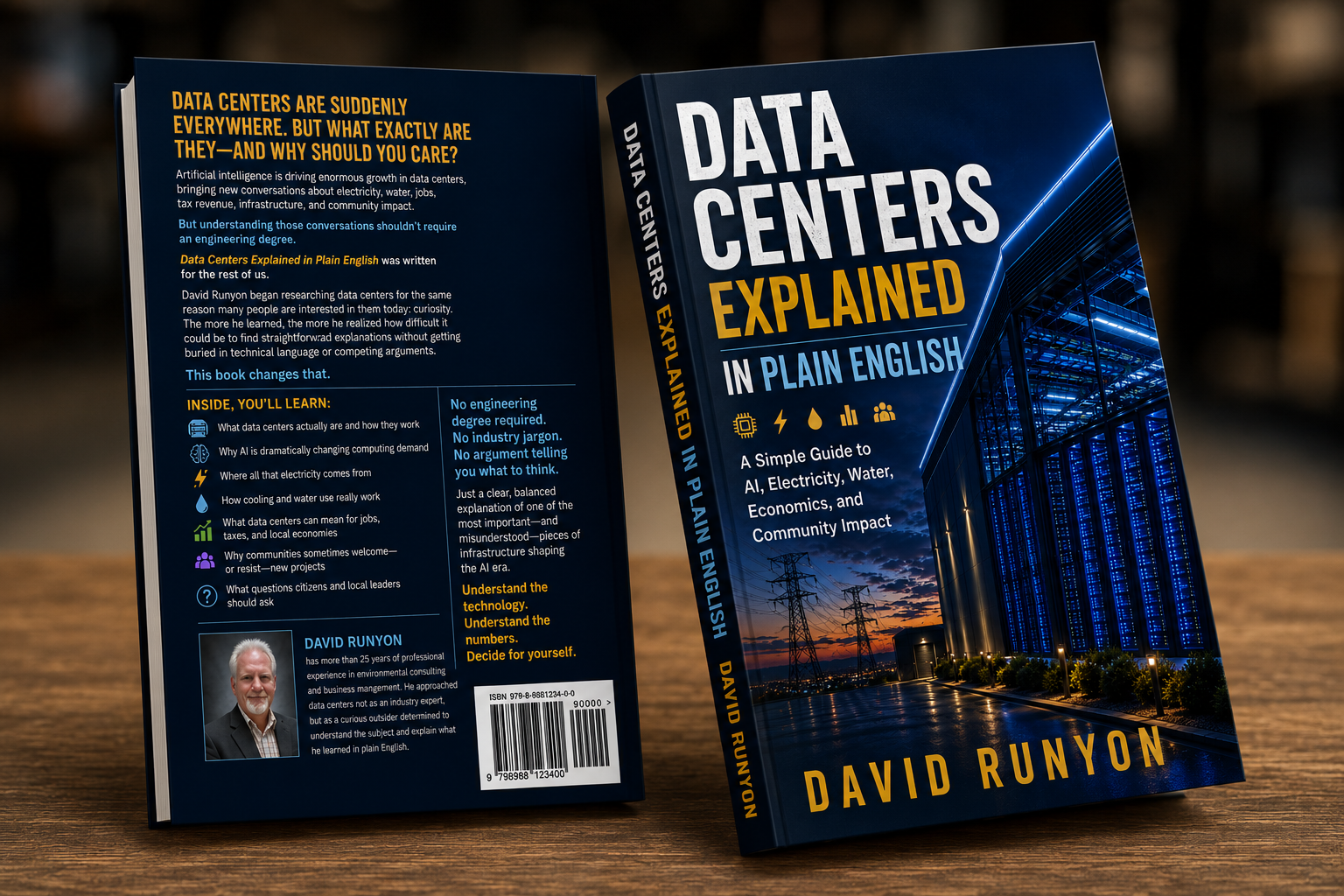
This article gives you the foundation. Data Centers Explained in Plain English connects the bigger questions about AI, electricity, cooling, water, economics, infrastructure, and community impact in one easy-to-follow guide.
The goal isn't to convince you to support data centers—or oppose them. It's to give you enough understandable information to evaluate the claims, numbers, benefits, concerns, and tradeoffs for yourself.
Understand the technology. Understand the numbers. Decide for yourself.
Prefer a printed copy or Kindle? Amazon has you covered. Want to start reading right now? The complete PDF is just $9.99.
Sources & Further Reading
Educational information only. Water requirements vary substantially by facility, cooling technology, climate, workload, water source, electricity supply, and operating conditions.